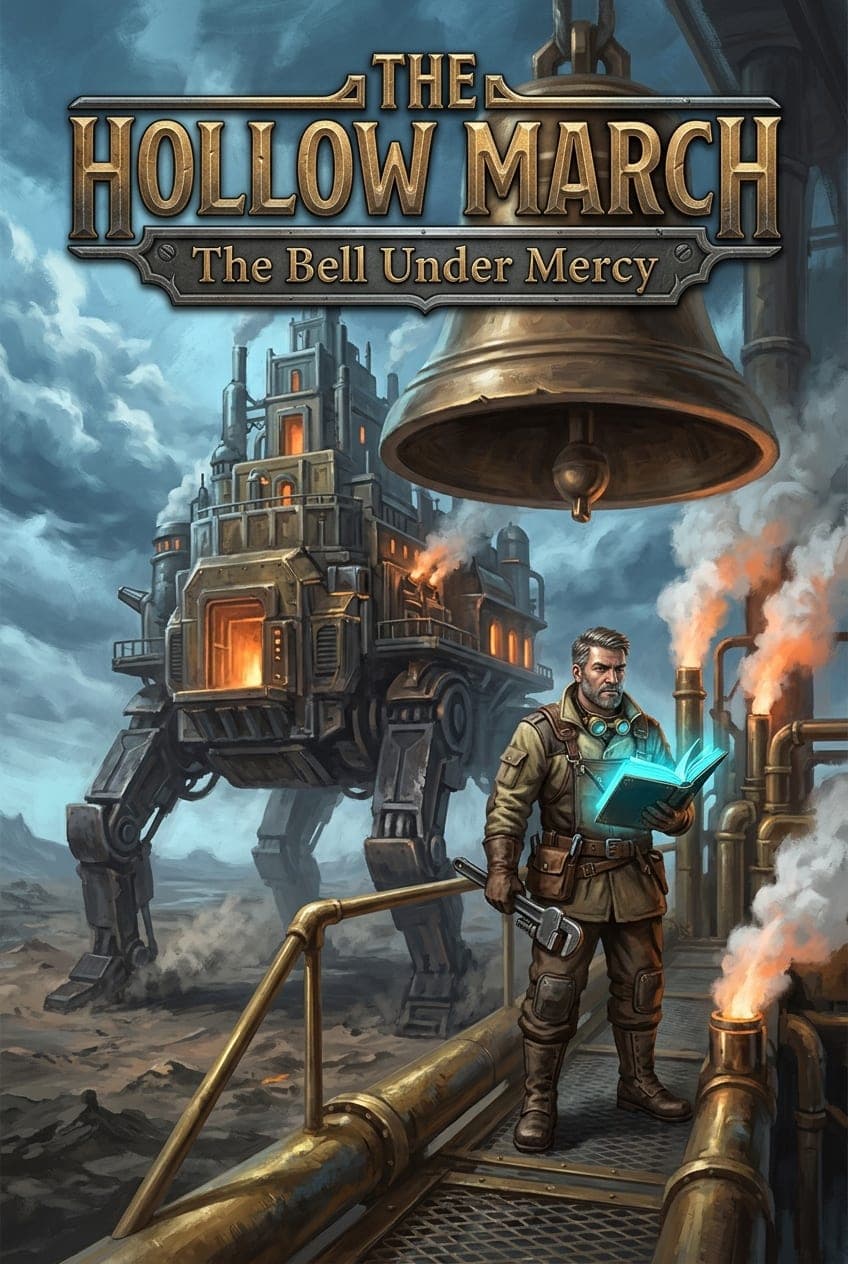
Six thousand three hundred miles below the crust of the Earth, gravity stopped behaving like an anchor and began to peel away like scorched skin.
For seventy-two hours, the descent shaft bored through the earth-shaking roots of the Kermadec-Tonga fracture had been an upright hell of tightly packed stone-glass melted rock waste, blazing bright dark rock veins, and roaring hot-water steam. At these depths, textbook geophysics dictated that lithostatic pressure should exceed three hundred and sixty gigapascals. Enough to compress carbon into diamond and reduce human bone to a greasy smear of calcium phosphate within five split seconds.
Yet Arthur Vance dropped through the end-post boundary layer. Then, the pressure gauge on the forearm wrist guard of his Mark IV Deep-Trench Rig didn’t burst.
Instead, the digital readout flickered, steadied. Then he held at an astonishing one hundred and four kilopascals. Standard sea-level air.
“Titus, hold the gravimetric skirt,” Arthur commanded over the internal squad tracking data net. His voice was steady, modulated with the cold, steady pace of a trauma surgeon barking orders over a sliced open main thigh blood vessel. “We’re crossing the end-post mantle horizon. Inertial dampening to seventy percent. Don’t let the sudden slowdown whip your neck plates.”