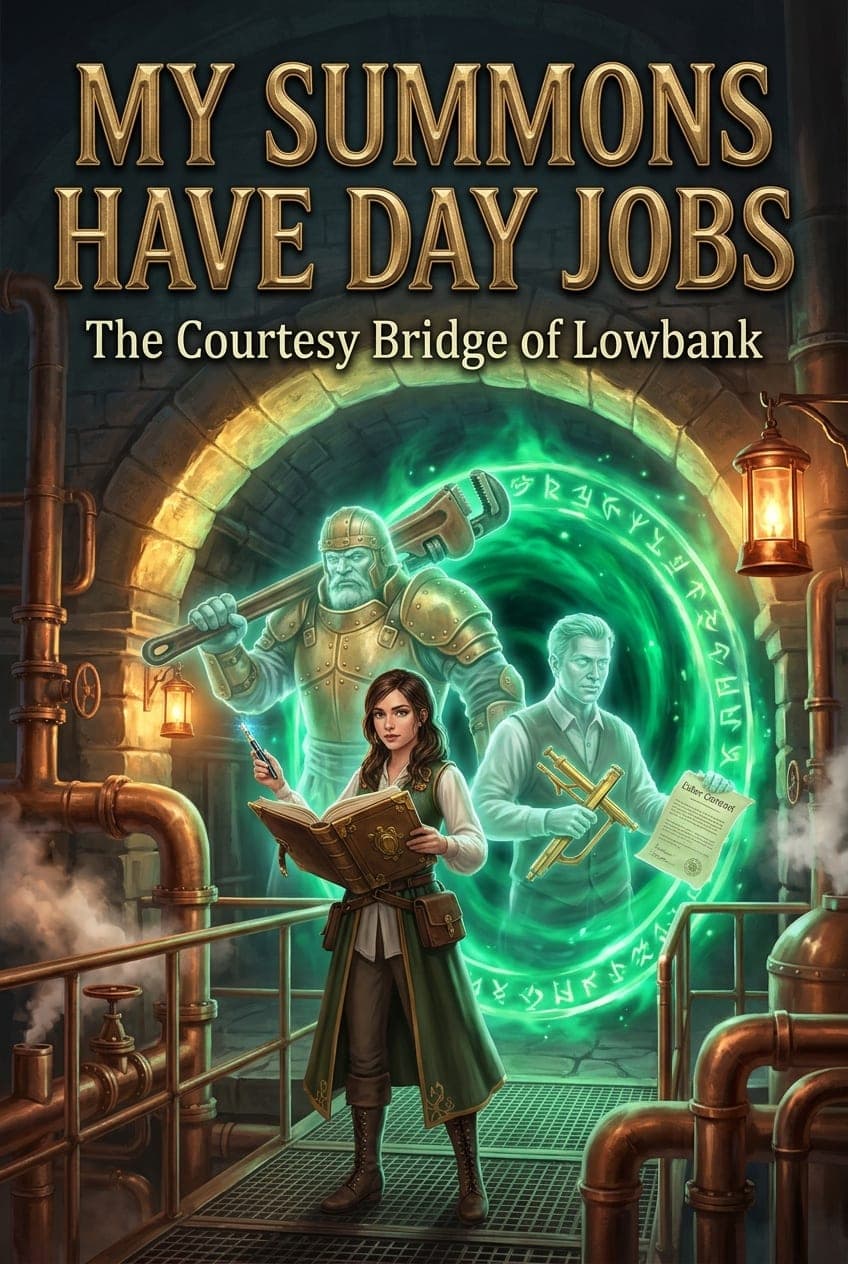
Mara called Pell from the gallery corridor, while the clerk was still pinning the charter’s limits to the door.
The corridor was empty. A long stone passage between the gallery and the hearing room, lit by a row of old lamps in brass cages, with a bench along one wall where witnesses waited to be called. Mara sat on the bench. There was a link panel set into the wall beside it, for the witnesses; she keyed Cinder’s yard office and waited.
The link carried Cinder’s night.
She heard it before she saw anything. A door closing, somewhere behind Pell, and its latch dropping. A kettle beginning to sing. And far off, very faint, a bell: one of the shelter bells on the lower terraces, the ones the wardens rang at the second hour of the night to tell the shelters the heat was holding.
Then Pell’s face. The yard office, the lamp on the desk, the timetables on the shelf behind him. He had a cup in his hand. He had not been asleep.
“Mara,” he said.
“I’ve got a few minutes,” she said. “Before the assembly.”
Pell looked at her through the link. At her face, at the dressing behind her ear, at the corridor’s caged lamps behind her. He looked a while without saying anything, the way he looked at a household sheet before he read it aloud, making sure of every line first.