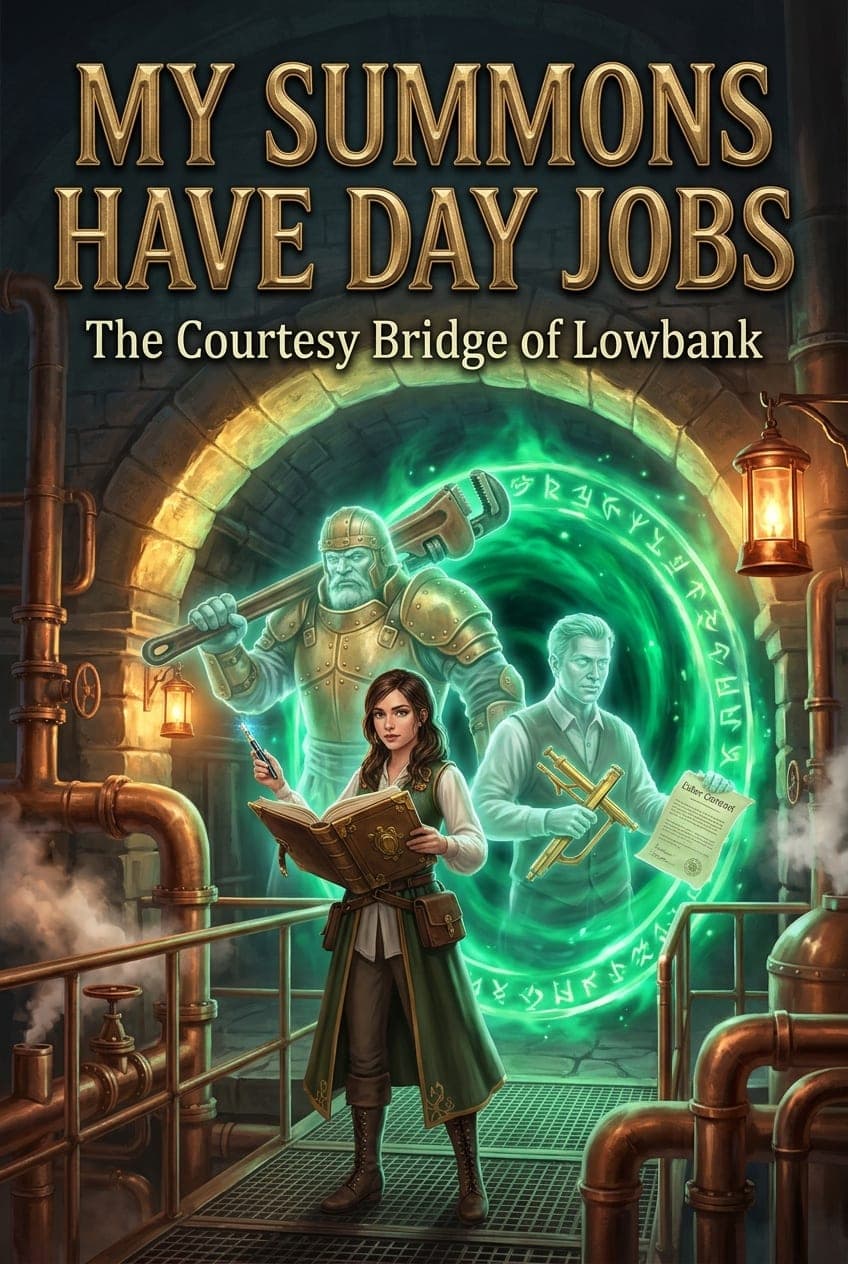
She built the wheel that night in the lowest chamber, on Lorn’s bench, out of things that could not be rounded.
The second clock. She had said it to Sera standing in front of the printout: nothing gets quenched on the blue line until the raw trace has been checked against a second clock. Something nobody can round. Every clock she had was a display: the control room’s, the lattice’s, the console’s, Caldris’s slate. Every one of them was a picture of a number made by a machine that took its time from somewhere else. If the signal coming down from above could run a fraction ahead and the display could round the fraction away, then any clock that lived on a display could be made to agree with it.
A wheel could not be made to agree with anything. A wheel turned or it did not.
She drew it first, in notebook II, on a blank page. A wheel, thirty centimeters across. Brass for the rim, because the Tern’s kit had a brass ring from an old pump flange that was nearly the right size and brass did not rust. Steel for the spokes and the hub, from the bench’s scrap. Around the rim, teeth, cut by hand. And a pawl, a small hinged steel finger, that dropped into the teeth one at a time as the wheel turned, so that the wheel advanced in clicks.